
The Challenge
HerBusiness had an older WordPress site built years ago with custom themes and features written in backdated PHP. Over time, the platform accumulated 71 active plugins. Because of outdated code, the site was highly fragile: upgrading the server’s PHP version or updating core plugins routinely caused critical crashes and broke page sections.
Worse, the page layouts, author details, and custom elements were hardcoded directly in old PHP widgets and templates. The marketing team was completely locked out of editing or updating layout assets. Any content change required developer support, slowing down operations.
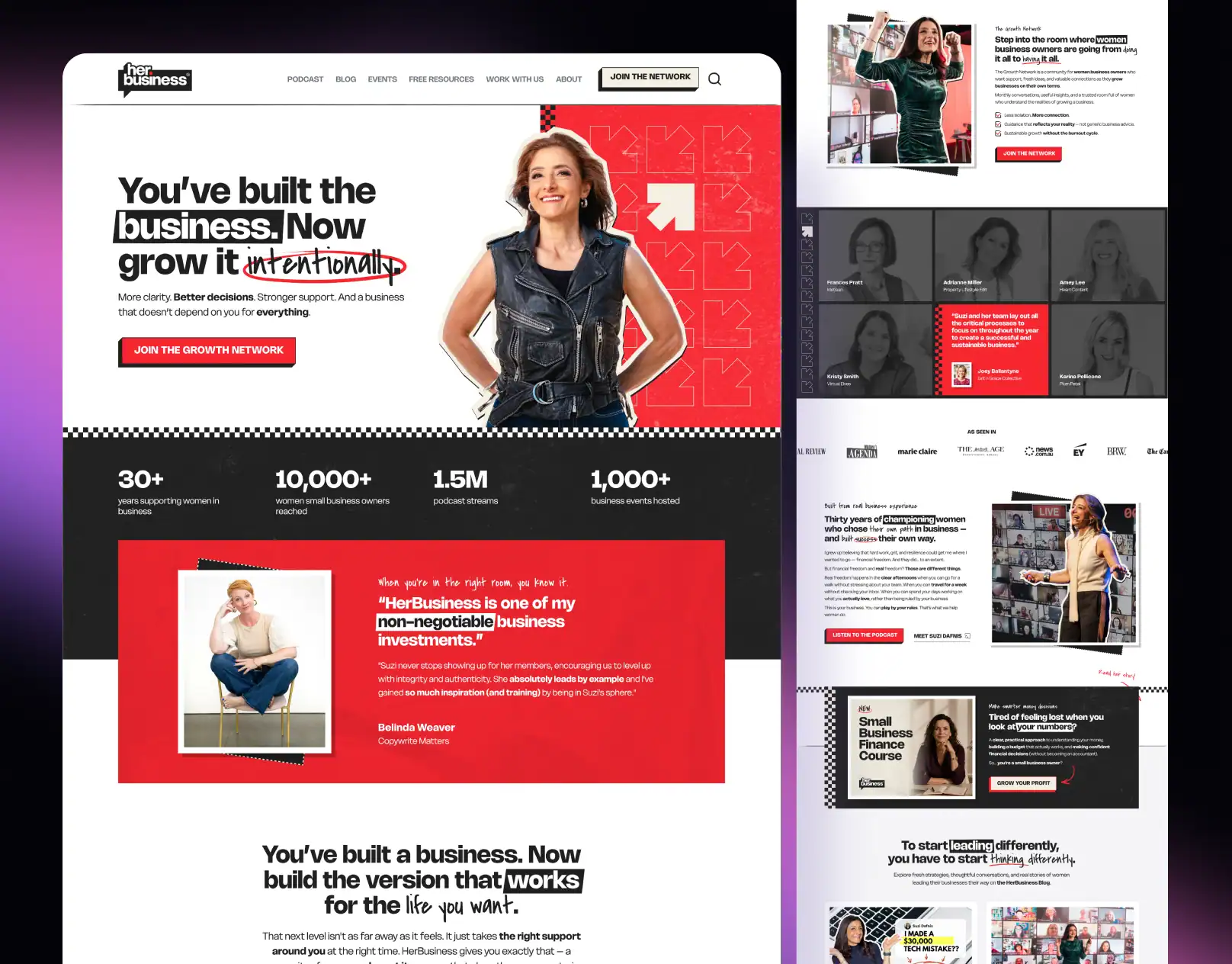
We did not change the visual layout or branding. Instead, we focused entirely under the hood—rebuilding with clean semantic HTML, hardening SEO structures, and converting hardcoded pages into customizable block templates.
— Sabbir Ahmed, Lead Architect
Our Solution
We implemented a complete infrastructure redesign to resolve technical debt, enabling support for modern PHP environments while giving the administrative team full visual editing access.
1. Framework Transition (Consolidating 71 Plugins to 15)
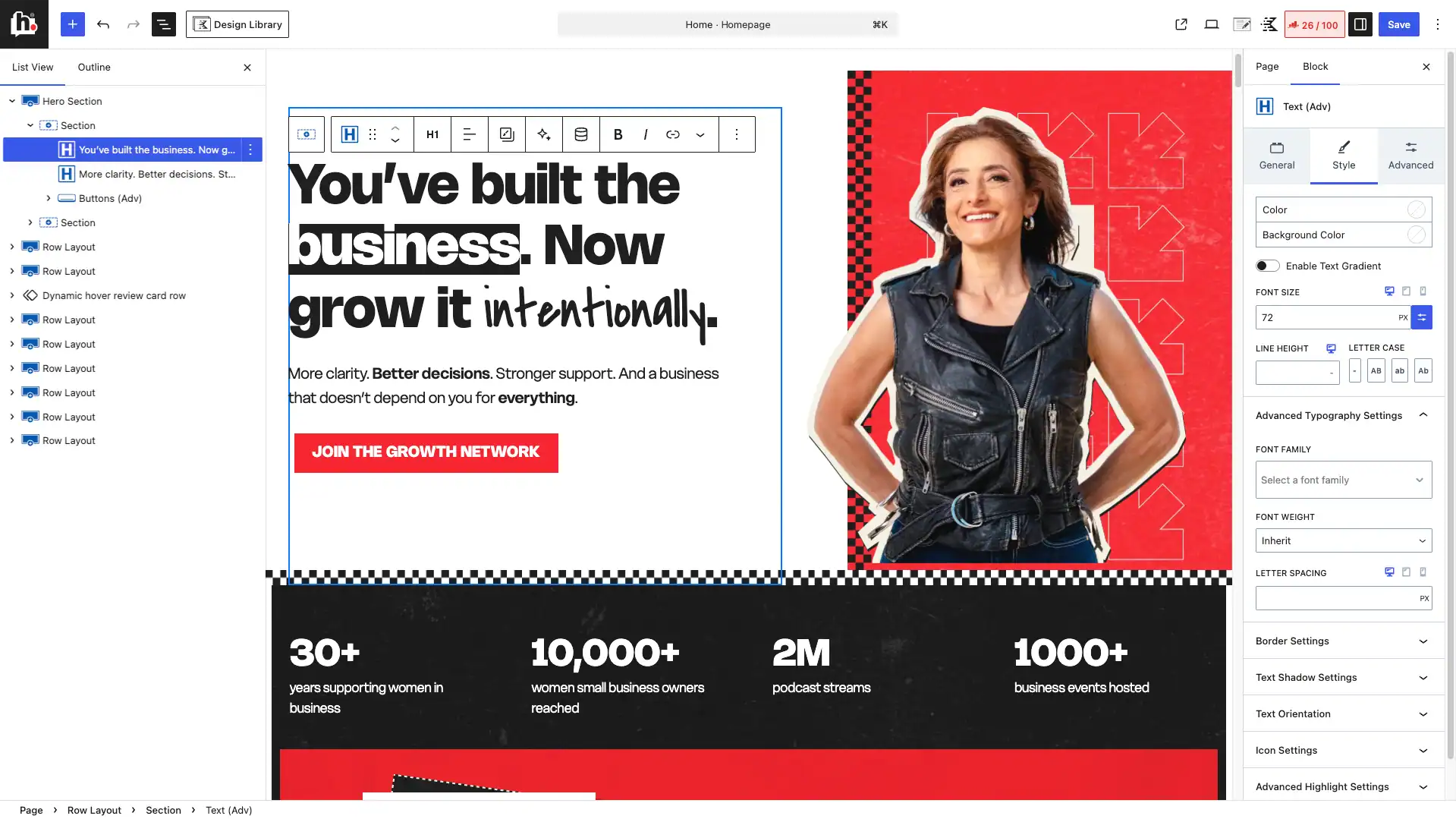
We removed dozens of single-use custom plugins and migrated the theme to the modern Kadence blocks framework (free + pro add-on suite). By nesting layouts inside clean Gutenberg sections, the entire page structure was made fully customizable and visible in the native editor. Any non-technical person can now edit text, change assets, or re-order elements in minutes without touching code.
2. The “HerBusiness Custom Suite” Plugin
We consolidated all custom programming (audio player, search fields, social sharing, and post filtering) into a single runtime suite. We wrote custom JS to override Kadence Block Pro’s infinite scroll, implementing a 3D retro button and a History API override that cleans pagination variables (like `?pg=2`) from the browser URL during AJAX fetches.
3. Safe AJAX Database Sanitization Utilities
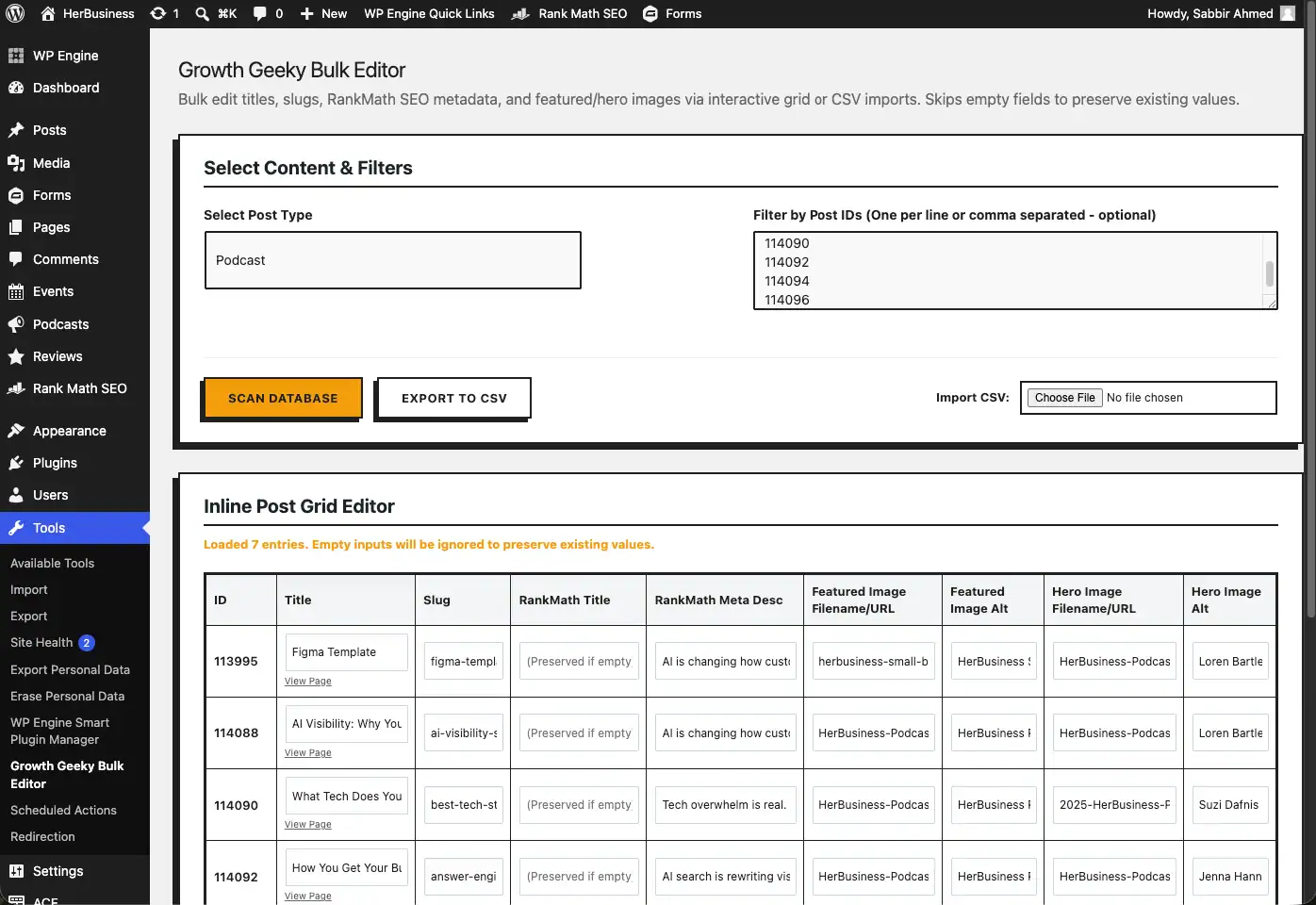
To clean legacy database tables without risking server timeout issues, we developed backend batch utilities: a regex-based title sanitiser to map podcast episodes to structured ACF fields, a media migrator to download external assets into the staging Media Library, and a profile migrator to remap BuddyPress users to native WordPress structures.
Results & Deliverables
The visual layout remained unchanged, but the back-end reorganization delivered major performance and accessibility improvements.
Custom Developer UI Mockup
// Intercept History API to strip query strings
history.pushState = function(state, title, url) {
    return originalPushState.apply(this, [state, title, cleanUrl(url)]);
};

function cleanUrl(url) {
    const parsed = new URL(url, window.location.origin);
    parsed.searchParams.delete('pg');
    parsed.searchParams.delete('paged');
    return parsed.pathname + parsed.search;
}
71
15
Active Plugins
100%
Block Customizability
+60%
Page Load Time
Calculated Return on Investment (ROI)
By retiring 56 commercial plugins, we eliminated multiple annual renewal fees. More importantly, we improved content management velocity: publishing and modifying layouts used to take 24-48 hours (waiting for developer template code shifts); now any non-tech administrator can do it in 2 minutes directly inside the Gutenberg editor.
Security & PHP Hardening
The deprecated PHP hooks and backdated code dependencies locked the old site in insecure environments. By refactoring custom themes to support modern PHP 8.x structures, we significantly hardened the platform’s security posture and made it compatible with future WordPress releases.
URL Redirect & Backlink Protection
To preserve search engine equity, we integrated remapped profile URLs directly with the Redirection API. Remapping bases from `/author/` to `/profile/` automatically generates permanent 301 redirects, ensuring zero broken links or lost domain authority.
Technology Stack
WordPress Core
Kadence Pro
ACF API
Vanilla ES6 JS
PHP OOP
RegEx Engines